
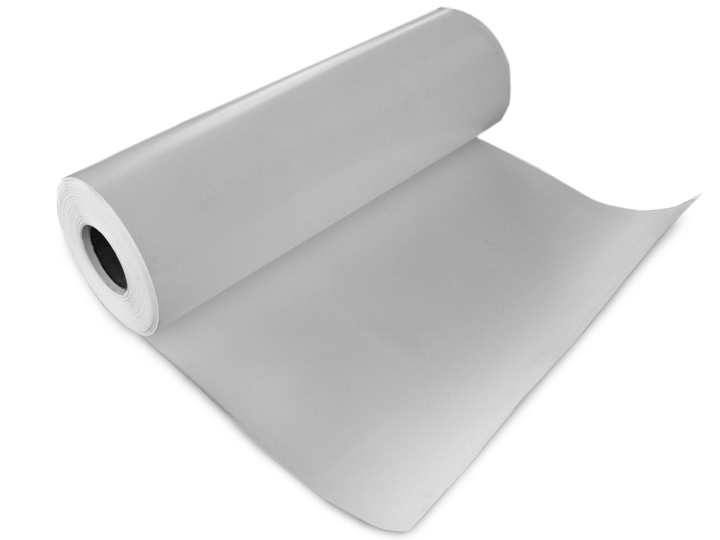
Zinco Connecting Membrane WSB100-PO Roll approximately / approx. 0.60 x 15.0 m
Approx. 60 cm wide Connecting Membrane for the Root Barrier WSB 100-PO made of flexible polyolefin (FPO).
Order Nr.:
1195
Product information "Zinco Connecting Membrane WSB100-PO Roll approximately / approx. 0.60 x 15.0 m"
Weight approximately / approx. 9.0 kg/roll
| Order Nr.: | 1195 |
|---|---|
| Colour: | white / white |
| Length [m]: | 15,0 |
| Material: | flexible polyolefin |
| Width [mm]: | 600,0 |
| Packaging unit: | Role |
| Weight [kg]: | 9,0 |
| Compatible with bitumen: | Yes |
| Non-rotting: | Yes |
| UV-stabilized / protected against UV light: | Yes |
made of flexible polyolefin (FPO), without reinforcement, for connection / connector to edges of roof / perimeter and roof penetrations, including welding of the seams.
Product: Zinco Root Barrier "WSB 100-PO Connecting Membrane"
Unit: pcs
Order Nr.: 1195
These Installation Instructions describe the essential steps for using this product. Please also observe the relevant standards and guidelines, in particular the occupational health and safety regulations.
Installation should not be carried out if there is a risk of storms.
General information:
The Root Barrier WSB 100-PO is a flexible, thermoplastic polyolefin membrane with an integrated reinforcement made of polyester fabric. The membrane is homogeneously welded in an overlapping process using hot air, either manually or automatically. Due to the changing boundary conditions such as air temperature, moisture, wind movement, etc., each sheet should be given 30 minutes to relax before welding. For the same reasons, test welds and peel tests must be carried out before starting the actual welding work, after work interruptions and in the event of changing weather conditions.
Laying:
On non-root resistant waterproofing of the roof, the Root Barrier WSB 100-PO is laid over the entire surface of the roof with the white side facing upwards. For rising structural elements, the non-reinforced, expandable Connecting Membrane is suitable, which is fixed at the upper end with the Clamping Profile AP 60 or the Clamping and Protection Profile AP 150. It may make sense for the roofer to attach the Connecting Membrane in advance. The prefabricated corners can be used as both inside and outside corners. The seam overlap is approximately / approx. 75 mm, whereby the seams must be at least 38 mm wide for automatic welding machines and at least 50 mm wide for manual welding machines.
Cutting:
The Root Barrier WSB 100-PO can be cut using a cutter knife (with a hard blade) or sturdy universal scissors. When cutting, make sure that the waterproofing of the roof is not damaged under any circumstances! If damage does occur, it must be reported and repaired immediately. The Root Barrier must be cut in a circle above roof outlets, approximately / approx. 1 cm larger than the roof outlet all around (cross cutting is not sufficient!). To protect the edges of sheets cut on site, these should be used as the bottom sheet if possible. The seam surfaces must be free of any dirt, as this can hinder homogeneous welding. If the seam surfaces are heavily soiled, they must be carefully cleaned with a clean cotton cloth soaked in acetone or xylene.
Caution: The seam connection of the test weld can only be tested for strength after the seam has cooled down sufficiently. A perfect weld seam will always separate at the fabric when it is peeled off.
Substrate:
The substrate must be level, closed, free of burrs and protrusions, and pressure-resistant to allow the contact pressure required for welding. A protective layer of heat-resistant geotextile with at least 300 g/m² (e.g. Zinco Protection Mat TSM 32) underneath the Root Barrier is recommended
Weld the lap weld with automatic machines:
Only welding machines with individually adjustable temperature and running speed and the required contact pressure may be used. At ambient temperatures of -5 °C to 30 °C, the welding temperature to be set is 560 °C to 620 °C at a running speed of between 2.4 and 3.7 m/min and an air volume of 80-100 %. The setting must be adjusted to the boundary conditions and checked by means of a test weld and a peel test (see point 1).

Welding the lap weld with hand-held devices:
Only welding devices with individually adjustable temperature settings may be used. A 40 mm wide, heat-resistant plastic roller must be used for pressing.

Welding must be carried out in three phases:
a. Attachment to fix the web.
b. Welding the lower layer to the edge of the sheet (prevents the hot air from escaping inwards).
c. Seal-weld up to the edge of the upper layer.
Installation should not be carried out if there is a risk of storms.
General information:
The Root Barrier WSB 100-PO is a flexible, thermoplastic polyolefin membrane with an integrated reinforcement made of polyester fabric. The membrane is homogeneously welded in an overlapping process using hot air, either manually or automatically. Due to the changing boundary conditions such as air temperature, moisture, wind movement, etc., each sheet should be given 30 minutes to relax before welding. For the same reasons, test welds and peel tests must be carried out before starting the actual welding work, after work interruptions and in the event of changing weather conditions.
Laying:
On non-root resistant waterproofing of the roof, the Root Barrier WSB 100-PO is laid over the entire surface of the roof with the white side facing upwards. For rising structural elements, the non-reinforced, expandable Connecting Membrane is suitable, which is fixed at the upper end with the Clamping Profile AP 60 or the Clamping and Protection Profile AP 150. It may make sense for the roofer to attach the Connecting Membrane in advance. The prefabricated corners can be used as both inside and outside corners. The seam overlap is approximately / approx. 75 mm, whereby the seams must be at least 38 mm wide for automatic welding machines and at least 50 mm wide for manual welding machines.
Cutting:
The Root Barrier WSB 100-PO can be cut using a cutter knife (with a hard blade) or sturdy universal scissors. When cutting, make sure that the waterproofing of the roof is not damaged under any circumstances! If damage does occur, it must be reported and repaired immediately. The Root Barrier must be cut in a circle above roof outlets, approximately / approx. 1 cm larger than the roof outlet all around (cross cutting is not sufficient!). To protect the edges of sheets cut on site, these should be used as the bottom sheet if possible. The seam surfaces must be free of any dirt, as this can hinder homogeneous welding. If the seam surfaces are heavily soiled, they must be carefully cleaned with a clean cotton cloth soaked in acetone or xylene.
Caution: The seam connection of the test weld can only be tested for strength after the seam has cooled down sufficiently. A perfect weld seam will always separate at the fabric when it is peeled off.
Substrate:
The substrate must be level, closed, free of burrs and protrusions, and pressure-resistant to allow the contact pressure required for welding. A protective layer of heat-resistant geotextile with at least 300 g/m² (e.g. Zinco Protection Mat TSM 32) underneath the Root Barrier is recommended
Weld the lap weld with automatic machines:
Only welding machines with individually adjustable temperature and running speed and the required contact pressure may be used. At ambient temperatures of -5 °C to 30 °C, the welding temperature to be set is 560 °C to 620 °C at a running speed of between 2.4 and 3.7 m/min and an air volume of 80-100 %. The setting must be adjusted to the boundary conditions and checked by means of a test weld and a peel test (see point 1).
Welding the lap weld with hand-held devices:
Only welding devices with individually adjustable temperature settings may be used. A 40 mm wide, heat-resistant plastic roller must be used for pressing.
Welding must be carried out in three phases:
a. Attachment to fix the web.
b. Welding the lower layer to the edge of the sheet (prevents the hot air from escaping inwards).
c. Seal-weld up to the edge of the upper layer.
This product is accessories from
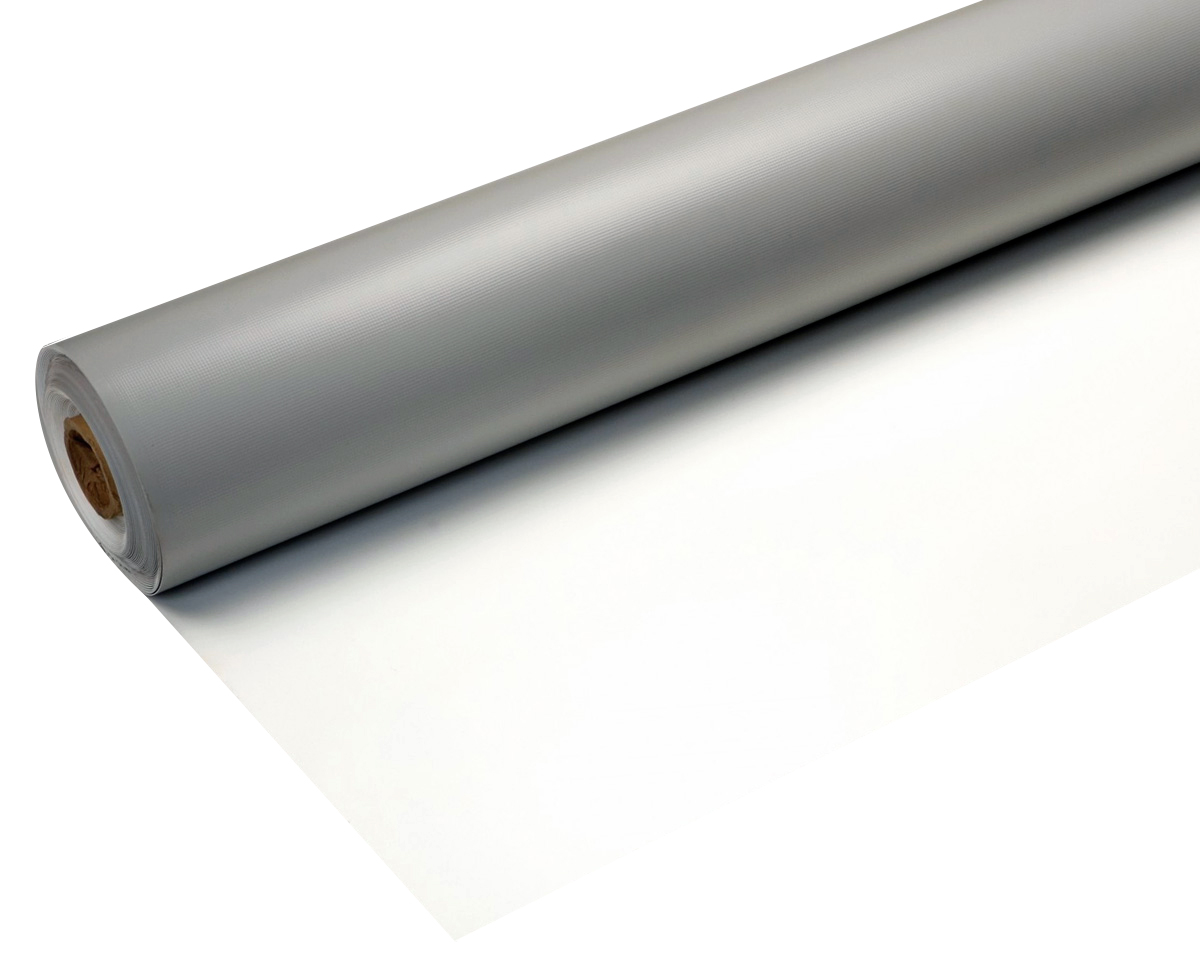
Approx. 60 cm wide Connecting Membrane for the Root Barrier WSB 100-PO made of flexible polyolefin (FPO).
Zinco Root Barrier WSB 100-PO, roll 2.44 x 30.50 m, approx. 1.1 mm
Hot air welding membrane with "FLL test", can be used as root and rhizome protection on extensive and especially on intensive planting roofs.
Hot air welding membrane with "FLL test", can be used as root and rhizome protection on extensive and especially on intensive planting roofs.