

Zinco Shear-Fix LF 600 for absorbing shear and tensile forces
Heavy-duty / extremely high loadable Connector made of solid stainless steel for installation in waterproofing / sealing pitched roofs according to the loose / fixed flange principle. Replaces shear sills in conjunction with the ZinCo Eaves Profiles.
max. bearing capacity up to 600 kg/each; two-part, made of solid stainless steel, material thickness 5 mm each, surface trowalised, dimensions / measurement base plate 90 mm x 170 mm (fixed flange), dimensions / measurement holder made of solid stainless steel 60 mm x 140 mm, height 100 mm, incl. accessories and all screws for fastening in wooden substrate. Weight including screws approx. 1.6 kg. Fastening devices certified by construction supervision authorities for fixing to concrete are also available on request (concrete strength class min. C20/25).
| Order Nr.: | 9569 |
|---|---|
| Material: | Stainless steel 5 mm, surface trowalised |
| Length [mm]: | 140,0 |
| Width [mm]: | 60,0 |
| Height [mm]: | 100,0 |
| Packaging unit: | Piece |
| Weight [kg]: | 1,6 |
| Additional information: | Load bearing capacity: approx. 600 kg per connector; base plate: approx. 170 x 90 mm |
made of solid stainless steel in two parts, surface sandblasted, material thickness 5 mm each, dimensions / measurement base plate approx. 90 mm x 170 mm (fixed flange), dimensions / measurement holder made of solid stainless steel approx. 60 mm x 140 mm, height 100 mm, incl. accessories and screws for fastening in wooden substrates, weight approx. 1.6 kg/each incl. screws.
For securing the greening structure against slipping in conjunction with the Eaves Profile TRP 140 at the eaves or as a shear sill in the Area. Installation is carried out in the supporting structure with 5 corrosion-protected screws and is sealed using the loose fixed flange system in accordance with DIN 18195 with the waterproofing materials used on the building (waterproofing of the roof). Load bearing capacity 600 kg/Connector.
Fastening devices certified by construction supervision authorities for fixing to concrete are also available on request (concrete strength class min. C20/25).
Product: Zinco "Shear-Fix LF 600" shear fix bracket
Unit: pcs
Order Nr.: 9569
1 Base plate
1 Retaining bracket LF 300 or LF 600
2 Nuts M10 (stainless steel)
5 Wood screws (galvanized steel)
2 Intermediate layers made of EPDM (1 large + 1 small)
1 Bit
Preliminary Remarks:
The installation steps of the Shear-Fix LF300 and the LF 600 are basically identical. The installation and waterproofing of the base plate (fixed flange) vary slightly depending on the waterproofing material used. Installation step 3 is therefore divided into waterproofing with bituminous or polymer bitumen membranes and plastic or elastomeric membranes. Usually, Shear-Fix are installed on rafters made of solid structural timber, (softwood strength class C24, grading class S10 or higher) or similar suitable base material.
The required minimum width of rafters is 100 mm (predrilled screw holes, width 5 mm; otherwise min. 140 mm of rafter width). The base plate (fixed flange) is to be centred on the rafter.
When installing on wooden formwork or thick wood (e.g. Kerto or similar), suitable screwing devices must be provided by the installer. The required material thickness of the formwork depends on these screwing devices.
The choice of the screwing devices needs to satisfy the load requirements of the Shear-Fix LF 300 of at least 3 kN (Shear-Fix LF 600: at least 6 kN).
Note:
Any illustrations in these instructions show installation at the eaves of a roof. Regardless of these examples installation is also possible within the roof area in order to provide shear protection.
Installation Steps:
1. Measure and mark the installation positions. In case of a bituminous waterproofing, the membrane needs to be cut out in the size of the base plate, in order to avoid a significant elevation of the entire build-up around the base plate.
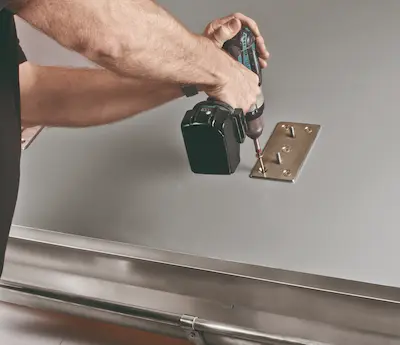
Tighten base plate
2. Install the base plate (fixed flange) according to regulations at the designated position using the 5 wood screws provided. Make sure that the screws are set orthogonally to the base plate. Matching bit inserts are included in the scope of delivery. The screw holes should be pre-drilled with 5 mm.
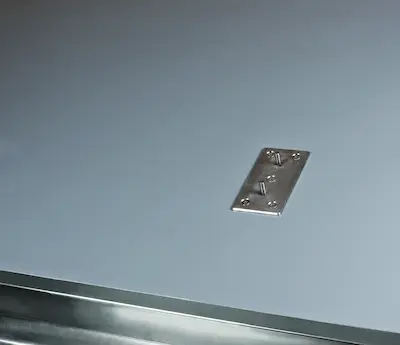
Note:
Construction and installation based on German Standard DIN 18195 and on the Flat Roof Guidelines Use only in non-pressurized water conditions according to German Standard DIN 18195, DIN 18531 and Flat Roof Guidelines For the installation on concrete use four concrete screw anchors (in case of LF 600 five), type Würth W-BS/A4 Ø 6 x 65 or similar, according to manufacturer’s instructions.
3. Cut blanks from the used waterproofing material.
Waterproofing with bituminous and polymer bitumen membranes:
In the case of waterproofing with bituminous and polymer bitumen membranes, at least two layers are required according to regulations. The 1st layer is installed at least 80 mm beyond the base plate; the 2nd layer is welded at least 80 mm beyond the 1st layer. For single-layer bituminous membranes, proceed according to the manufacturer's instructions. Mark the positions for the threaded bolts onto the blanks of waterproofing material and punch out with a 12 mm Ø hollow puncher.
Note:
The supplied larger EPDM inter mediate layer is not required for bituminous waterproofing.
Waterproofing with plastic and elastomeric membranes:
If plastic or elastomeric waterproofing membranes are used, place the large EPDM protective sheet over the base plate. The size of the blank piece which is overlapping the EPDM-intermediate layer needs to allow for manual hot air welding according to manufacturer’s instructions. Mark the positions for the threaded bolts onto the blanks of waterproofing material and punch out with a 12 mm Ø hollow puncher.
Note:
It is not allowed to use any waterproofing membranes laminated with separating or protective sheets from below.
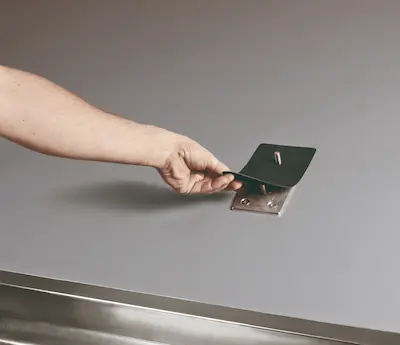
Place larger EPDM intermediate layer
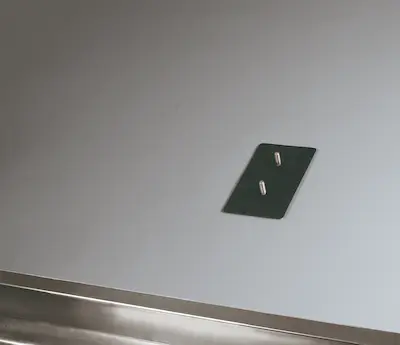
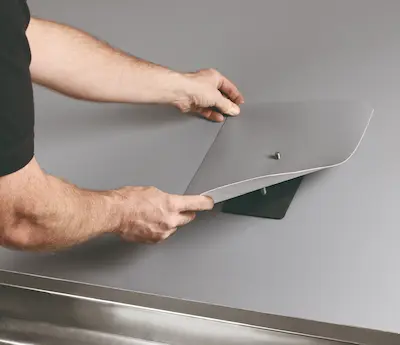
Punched blank piece of membrane
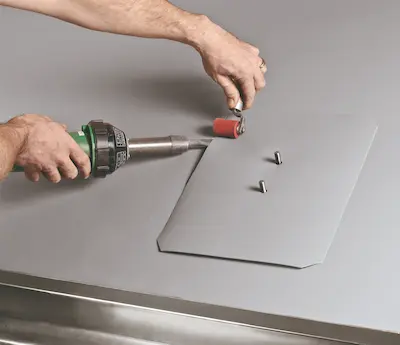
Professional welding of the blank piece
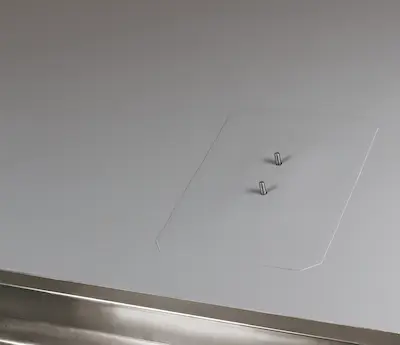
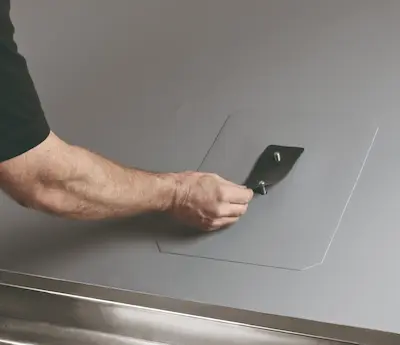
Place smaller EPDM intermediate layer
4. Place retaining bracket (loose flange) over the threaded bolts and Tighten the two included M10 nuts (wrench size 15) evenly alternating, apply ing a torque of between 20 Nm and 24 Nm. We recommend using a torque wrench to ensure the required tightening values.
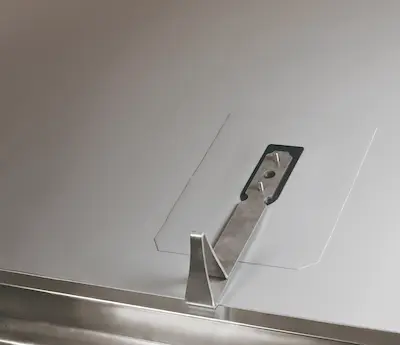
Set Shear-Fix LF 300 over threaded bolt
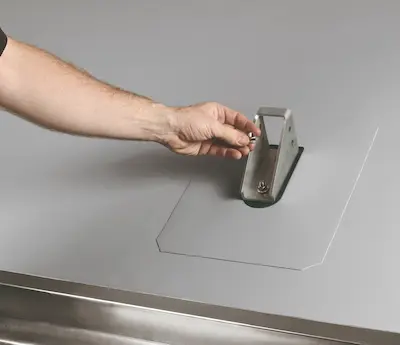
Set Shear-Fix LF 600 over threaded bolt
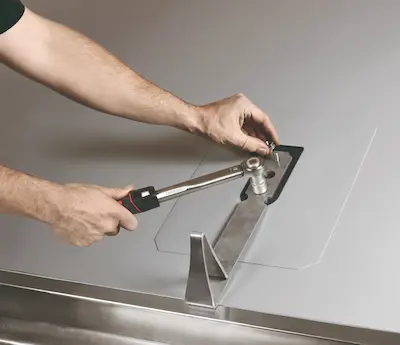
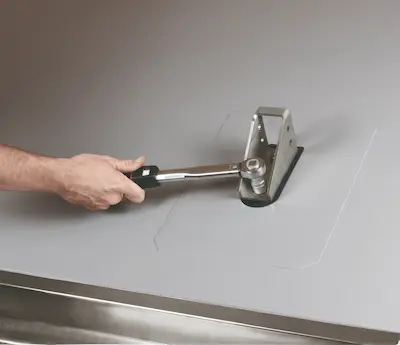
Tighten M10 nuts with 20 Nm to 24 Nm
5. Check the tightness of the nuts twice over a period of 24 hours and retighten if necessary.
6. Finally, double-check all welding joints of blank pieces and the tightness of screw connections.
This product is also available in other dimensions / measurements / specifications

Heavy-duty / extremely high loadable Connector made of solid stainless steel for installation in waterproofing / sealing pitched roofs according to the loose / fixed flange principle. Replaces shear sills in conjunction with the ZinCo Eaves Profiles.

Heavy-duty / extremely high loadable Connector made of solid stainless steel for installation in waterproofing / sealing pitched roofs according to the loose / fixed flange principle. Replaces shear sills in conjunction with the ZinCo Eaves Profiles.

Heavy-duty / extremely high loadable Connector made of solid stainless steel for installation in waterproofing / sealing pitched roofs according to the loose / fixed flange principle. Replaces shear sills in conjunction with the ZinCo Eaves Profiles.